


Gearing up to achieve sustainable growth, Harmonic Drive applies continuous improvement and problem-solving tools outside their manufacturing processes.
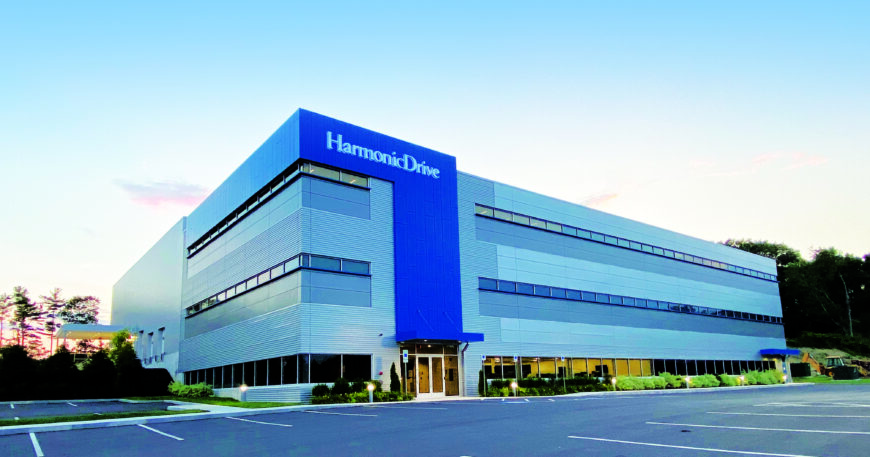
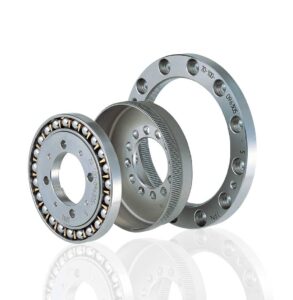
Harmonic Drive, LLC, has been a worldwide leader in motion control for over sixty years. They manufacture Harmonic Drive® Strain Wave gearing, gears, gear units, and rotary actuators for high precision motor control applications, and serve the aerospace, defense, semi-conductor, machine tool, medical, manufacturing, robotics, and energy industries.
Their Beverly MA location is headquarters for the Harmonic Drive LLC with regional sales offices in New York, Illinois, and California and additional manufacturing facilities in Japan and Germany. The company is known for their strong engineering team who assist with concept, design, and technologies to tailor solutions that meet their customers’ motion control needs.
 “Harmonic Drive’s mission is to provide motion control solutions that give our customers a competitive advantage. To accomplish this, we continually invest in the growth of our employees and in our company’s capabilities.”
As Harmonic Drive continues to grow and evolve, they want to focus on process innovation and sustainable growth. In keeping with their Mission Statement, they began the year of training with Mass MEP. Harmonic Drive recognizes that their employees are what brings their success. They invest in the growth and capabilities of their employees who in turn continue to work toward the growth and success of the company.
Many companies work tirelessly to ensure that their manufacturing processes can support growth. Harmonic Drive’s leadership realized that they had to consider their entire business process “from Quote to Cash,” which meant looking at the business processes that could potentially hinder successful growth.
Mary Jane McCraven, Harmonic Drive’s Business Development Manager and Charlie Anastos the Vice President of Operational Excellence, referenced best practices summarizing that growth requires two things, a strong product and a successful sales and market strategy. Many sources suggest that company founders, CEO’s and leaders, with a clear-eyed vision for their growth journey find themselves well positioned to achieve scaled innovation.
With this objective in mind, and a focus on laying the groundwork for achieving sustainable growth for their business, Harmonic Drive began working with MassMEP project manager Michael Green on Value Stream Mapping outside of direct manufacturing. This process included an in-depth reflection on current state, and a vision of what a future state would look like.
The Current State mapping activities would assist them in determining the strength of their existing processes and indicate where improvements were needed.” Mike Green really seemed to enjoy the challenge of working on all the elements of the business outside of manufacturing, where he typically works, and applying tools to different processes!” shared Anastos.
 While mapping their current state processes “from Quote to Cash,” participants discovered that some procedures in place were not efficient. These gaps had impacts on quality, delivery, service, and cost but stemmed from less obvious, underlying issues that were much harder to detect and measure. As businesses grow and become busier, small problems often get a “band aid” and a well-intentioned vow to “take care of them properly when things slow down.” However, things don’t slow down when your business is experiencing rapid growth. Before you know it all those little issues that got quick fixes have become invisible yet they still compound to have a big effect on important business processes.
“It is never a question as to whether it can be done but is only whether one cares to spend the time and effort.” C. Walter Musser, inventor, founder Harmonic Drive LLC.
The Value Stream Mapping events were eye-opening and incredibly necessary in allowing Harmonic Drive to determine their course of action moving forward. A kickoff meeting was held with company leadership where they discussed the scope of the project and collected initial information. Four Current State maps were created between May and September 2025. From there the VSM teams broke the Current State maps into individual processes and began “deeper dives” into each.
The teams analyzed how and where time was spent in each of the processes from pre-order to payment processing. Surprisingly, they discovered that most of the lead time was spent on the pre-order processes before manufacturing even began! Mike worked with the team to look at the pre-order process in more detail by reviewing some customer case studies. Timelines and graphic representations were used to show how much of the time spent was value added and how much could be shortened, eliminated, or integrated to focus on the tasks that add value to the products and services that the customer is willing to pay for. These are the processes that move the product through production and out the door.
As they reviewed the summary of the case studies, it was identified that people don’t feel the average performance of a process since it’s what they’re used to. They feel the variation in the process. This is where the Harmonic teams needed to focus and make improvements to get to their desired Future State. The group did a lot of brainstorming and ended up with some key takeaways to help them determine what their Future State would look like. A Six Sigma tool, the SIPOC diagram, was used to show the Suppliers, Inputs, Processes, Outputs and Customers (SIPOC).
When developing their Future State Map, the assumption was that Harmonic Drive should not spend the same amount of time on simple requests as they do on complex projects. They had to work out how to standardize a process that has variable requirements by using process paths. This categorized their processes into four paths and then listed the requirements or circumstances of each and allowed the team to produce a high-level Future State map of the “Quote to Cash” process. What began as a Current State Map with redundant procedures and waste that resulted in a lengthy “Quote to Cash” time frame was now segmented into streamlined process steps.
From the Value Stream Mapping projects, the Harmonic Drive team created a list of Improvement Categories to work on to help them achieve their Future State Goals. Utilizing an effort impact graph, they prioritized how to attack projects. KPIs have been developed for the major business processes so they can track improvements and measure the impacts. Projects are underway!
 To prepare for sustainable future growth and allow a focus on process innovation, Harmonic Drive had to look beyond production to all other business processes to discover the root cause of issues that could impact their plans for the future.
Through their willingness to “dig deep” while mapping out the current state “Quote to Cash,” they identified areas of waste. Harmonic Drive’s work with Mass Mep and the implementation of tools learned will draw them closer to their desired Future State.
Harmonic Drive had a vision and was willing to spend the time and effort to move forward. They are now well along the path to realizing that vision.