


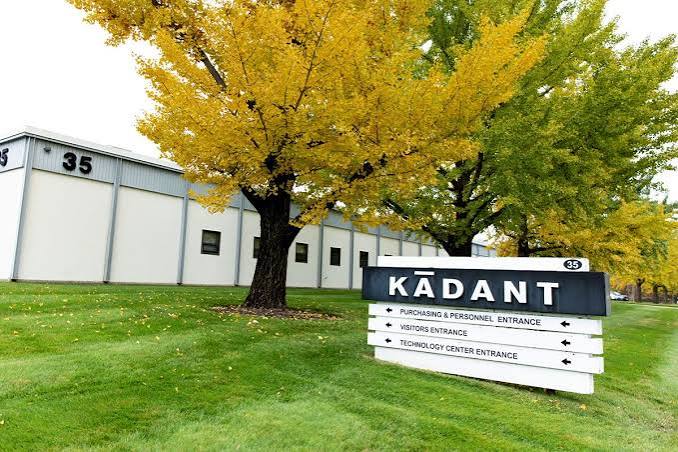
Kadant Solutions Division is part of Kadant Inc., a global leader in technology and engineered systems. The Auburn, MA division develops, manufactures, and markets a broad variety of systems used for cleaning, filtration, doctoring, and forming, along with related consumables for these processes. Industries worldwide rely on Kadant’s systems and products for converting, metals processing, roofing shingles, lithium-ion batteries, pulp and paper, engineered wood, food processing, fiberglass mat, synthetic fiber, wetlaid wovens, and molded pulp and tissue. Their systems and products help resource-intensive businesses enhance process efficiency, optimize energy use, and maximize productivity — and the company manufactures many of its product lines at the Auburn facility.
At the end of June 2026, Kadant Solutions completed two years of Continuous Improvement (CI) training, primarily funded through a Massachusetts Workforce Training Fund grant. Over one hundred employees took part, completing forty-nine days of training across seventeen separate events — many of them 6S Kaizens. The sixth “S” stands for Safety, which is woven into every element of CI work and added to the standard 5S: Sort, Shine, Set in Order, Standardize, and Sustain. Kadant’s 6S success is just one of many the company is celebrating.
Lots of projects!
Between 2024 and 2026, Kadant employees trained in Principles of Lean and Continuous Improvement, Front Line Supervisor Apprenticeship, Value Stream Mapping, Information Flow Kaizen, Basic Manufacturing Skills, and numerous other Kaizen events that took them onto the shop floor — 6S Workplace Organization, Rapid Improvement, Maintenance Excellence, TPM (Total Productive Maintenance), Set-up Reduction, and Pull Systems.
Dennis McGugan, Director of Operations at Kadant Solutions, had worked as a Continuous Improvement expert at a former company, so he understood the value of training employees and getting everyone involved in improvement activities. “The best ideas come from the experts — the people doing the work every day,” he says. Dennis had worked with MassMEP in the past and suggested the organization as a training provider.
What made Kadant Solutions decide to invest in such a significant training project?
“Investing in employee development is one of the best investments we can make,” shares Vicki Hunsberger, Associate Director of Global Marketing at Kadant Solutions. The operations leadership team, human resources, and department managers collaborated on a training plan aligned with strategic goals, “focused on strengthening our continuous improvement culture, improving operational efficiency, and preparing employees for future growth opportunities.” An earlier express grant MassMEP assisted them with had gone well, encouraging Kadant to pursue the general grant. “The grant gave us the opportunity to accelerate our efforts and provide a significant amount of high-quality training that may have otherwise been difficult to deliver on the same scale,” Vicki added. “It was also good timing — we had several operational improvement initiatives underway and wanted employees to have the tools and knowledge to support those efforts.”
The work begins
Kadant Solutions opened its Operational Excellence program with four Principles of Lean Manufacturing classes. These sessions combine classroom training with a hands-on clock-factory simulation, letting participants apply what they’re learning. Employees also picked up continuous improvement terms and tools they’d be hearing and using throughout the two-year project. McGugan “thinks the Lean clock-making sessions were great events to start with. They helped everyone understand what was going on as projects were being done around their facility and got people thinking about improvements they could make in their own work areas!”
Dennis also mentioned the Basic Manufacturing Skills training MassMEP customized for Kadant, which the company may offer annually to help new hires get up to speed.
Kadant’s Operational Excellence project covered a lot of ground. Mike Palin, the company’s Production Foreman, took part in nearly every event and singled out three Kaizens with the biggest impact: the Tool Room, Maintenance Excellence on the Fadal, and the Skiver project.
The Skiver 6S
The Skiver — a skiving machine, cuts or shaves material edges so they can be shaped precisely for manufacturing and material processing. Kadant’s skiver is a fairly large machine that sits on a platform. “It probably hadn’t been touched for years and really needed work,” admitted Palin. The team ripped out the platform and found leaks underneath the machine: clogged channels were spilling coolant onto the floor, raw coils were piled around the area creating a safety hazard, and tools and unclaimed items had turned every flat surface, including a long workbench, into storage for unclaimed items and a lot of “junk”. When not in use by the Skiver, the ends of the coil had to be protected. To do this the operator bent down and tore a piece of cardboard off a scrap on the floor to cover the coil end.
Kaizen work included:
- New platform built for the machine
- Reclaimed space by clearing out unrelated, unnecessary items
- Floor lines marking danger zones, walkways, and steps
- Safety signage added
- Coolant channels cleaned, made accessible and visible, with a cleaning schedule
- Dedicated storage created for Skiver parts only
- Magnetic strips added to the machine to hold its tools at point-of- use, cutting time spent searching
- Tools color-coded by machine with colored tape or paint
- Cardboard dispenser created for coil ends, streamlining the process and making it safer
- Visual storage for raw coils, with a mark indicating that the stack should be moved to recycling
- Checklists implemented to help sustain the improvements
“All the work done around the Skiver has made the operation move faster,” says Palin. “Cleaning and organizing freed up space so people can move around easier, find things faster, and the area is more pleasant and safer to work in.” Sustainment is going well, with the operator fully on board — while Palin was on vacation for the first week of the month, the operator swapped out the old checklist for the new one without being asked. People are getting on board.
Tool Room
Another big project took place in Kadant’s tool room, where both a 6S and a Maintenance Excellence Kaizen were done. The space was overcrowded and disorganized. It used to be a true “tool room,” staffed by a clerk who handed out tools, but over the years more and more stuff had found its way in, and the clerk had left the company. The toolmaker essentially moved into the space with his Bridgeports and other machines, mixed in among everything else people needed to access — unused and obsolete equipment, stock of every type and size, and constant foot traffic getting in his way. Toolmaking was slowed, finding tools took too long, and inventory was nearly impossible to manage; tools went missing and stock-outs were common.
The initial 6S assessment score was 108, out of a worst-possible 112, as scored by the employee team.
Kaizen work included:
- Sorting everything in the Tool Room, creating a Red Tag area for discards and a Yellow Tag area for incoming material staging
- Reorganizing the layout — tool making on one side of the room, tools and materials for distribution on the other — reducing time wasted searching for tools and materials, frustration, and interruptions for the toolmaker
- Organizing materials in new cabinets, racks, and shelves with labels and signage
- Introducing point-of-use storage
- Working toward a Kanban system and tool room supermarket to avoid future stock-outs
After the event, the 6S score dropped from 108 to 42 —over 61%, and the work continues!
Maintenance Excellence project on the Fadal CNC — chosen because it was the “big eyesore” in the shop. Not anymore! The team started with a thorough cleaning of the machine and area; besides looking better, cleaning made leaks and other problems visible. Materials and tools for operating, cleaning, and maintaining the Fadal were gathered, organized, labeled, and placed at point of use. Next, the team reviewed maintenance procedures — what needs doing, how often, and by whom — and built check sheets and schedules for regular cleanup and for daily and weekly maintenance: checking and filling fluids, replacing belts, clearing out chips, and other small tasks that have a big impact when not done. A Maintenance Plan was built using MaintainX software, which assigns preventive maintenance and cleaning tasks at set intervals once a machine’s details are entered.
“Now the Fadal is clean and organized, so it’s much better,” explains Palin. “It’s not exactly where we want it to be, but the improvement was huge, and the changes are being sustained better than they ever have been.”
Momentum and Mindset
6S work also enhanced the Gantry machine, which had a coolant problem creating a safety hazard. The team experimented with plastic sheeting and built a longer trough to channel coolant into the tank — it helped, but didn’t fully stop coolant from pooling on the table. After the event ended, the Gantry operator kept at it on his own, building a plexiglass wall to keep coolant off the floor. “He definitely took what they’d talked about in training and kept expanding on it, which is great,” says Palin. “He’s taking pride in making improvements. It got him into the mindset that we don’t always have to do things the way we’ve always done them —maybe if he does it a different way, it’ll be better for everybody, himself included.”
A Rapid Improvement Kaizen on the Poly and Synthetic Lines wrapped up with a list of action items. One of the biggest — organizing all the knives for the molder — fell to an employee named Tyler. New cabinets didn’t arrive until after the event, but he moved everything in and organized and labeled it himself “because it needed to be done.”
“We’ve seen improvements in workplace organization, standardization, process flow, safety, and communication between departments,” says Vicki Hunsberger. “Several teams continue to use the tools and methodologies they learned during the training. Beyond the specific projects, the biggest impact may be the mindset shift — employees are more engaged in identifying opportunities for improvement and finding solutions to everyday challenges.”
Mike Palin recalls an employee from the Skiver project who went back to his own work area afterward and, unprompted, started cleaning and organizing it — then did the same again later when training took him somewhere new. “It wasn’t his mess, but he took it upon himself because it was the right thing to do, and it benefits everyone,” Palin says. Kadant now has advocates across its teams carrying that work forward. Some employees admit they cleaned up their own areas partly to head off anyone else coming in to tell them what to do — but as Palin notes, “nobody came in from MassMEP and started telling anyone what to do. Instead, they were asked: what can we as a team do to make this better? And the team decided what to do.” Whatever the motivation, the shop looks cleaner than ever.
Regardless of how they came to be, the individual improvements add up to greater efficiency and safety, a sense of ownership and pride among Kadant’s employees, and a company positioned for future growth. For each event, teams identified problems, gathered data, mapped current and future states, brainstormed solutions, and implemented changes — some still in progress, others already running on their own with sustainment procedures in place. Continuous Improvement in pursuit of Operational Excellence!
So how did MassMEP do?
“As for MassMEP, everybody was great to work with, and we worked with a lot of different people from MassMEP!” says Mike Palin.
The work Kadant Solutions has done with MassMEP through this two-year grant has changed how Kadant’s people think about their work areas and responsibilities. Dennis McGugan was pleased with the partnership, noting that “having a consultant or third party involved in training helps make people understand we take this training seriously. Employees see the effort put into making sure classes are filled and materials needed for 6S and other events are provided — that the work is supported. The company is taking this seriously, and they know they should too.”
“MassMEP was an amazing partner throughout the entire process! Rick Mongeau, Mike Green, and all the instructors took the time to understand our business, culture, and goals before recommending solutions. Their team was professional, down-to-earth, responsive, and flexible, and consistently tailored the training to our needs. Because the facilitators helped employees apply concepts directly to their work environment, the training felt meaningful and sustainable — and the Kaizen events were especially impactful, since employees could see the results of their efforts right away. The quality of instruction exceeded our expectations, and employees consistently gave positive feedback. Equally important, MassMEP helped us translate what employees learned into actions that improved our business. That application piece is what made the training especially valuable.”
— Vicki Hunsberger, Associate Director of Global Marketing, Kadant Solutions